

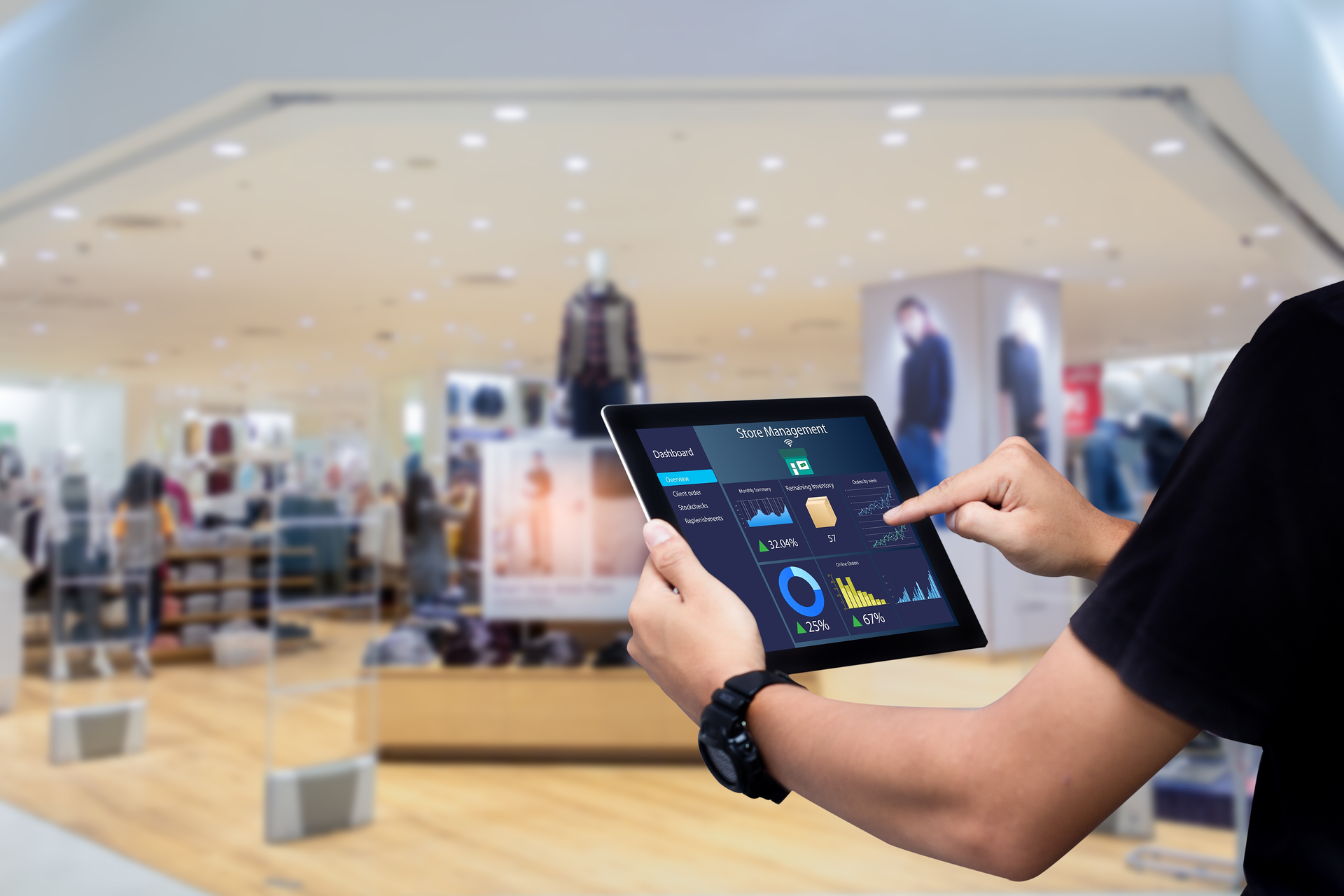
Turning retail POS data into real-time store insights
Retail environments generate vast amounts of data, such as point-of-sale (POS) transactions and inventory movements, which can be used to assess customer behavior and staff activity. Yet despite this abundance of data, many retailers still struggle to turn information into timely, actionable insights at the store level. Traditional reporting tools and standalone business intelligence platforms often fail to keep pace with the speed and complexity of modern retail operations.
Embedded analytics is changing that dynamic. By integrating dashboards and analytical insights directly into retail POS systems and operational applications, retailers can give store teams immediate access to the information they need.
Below, we’ll explore how icCube acts as a true analytics partner for retail SaaS providers, embedding real-time insights directly into POS and operational workflows so teams can turn compex data into clear, actionable decisions.
The growing complexity of retail POS data
Retail operations are inherently fast-moving. Store managers and frontline staff must respond in real time to changing customer demand, fluctuating inventory levels, promotions, staffing constraints, and supply chain disruptions. POS systems sit at the center of this activity, capturing critical data that reflects how a store is performing minute by minute.
However, POS data rarely exists in isolation. It is often combined with inventory management systems, customer loyalty platforms, workforce tools and e-commerce channels, where merchants frequently run into Shopify analytics limits when scaling complex data requirements. When insights are spread across disconnected systems or delivered through static reports, store teams are left reacting too late or relying on intuition rather than evidence.
As retail organizations scale across regions and channels, the challenge becomes even greater: how to provide consistent, reliable performance insights while still accounting for local context at each store.
Why traditional reporting falls short
Historically, many retailers have relied on periodic reports or centralized BI tools to analyze store performance. While these approaches can support high-level analysis, they often introduce delays and friction at the operational level.
Reports generated hours or days after transactions occur limit a team’s ability to act quickly. Switching between operational systems and external analytics tools interrupts workflows. And generic dashboards that are not tailored to specific roles can overwhelm users with irrelevant metrics.
In a retail environment where timing and context matter, these limitations reduce the practical value of analytics.
The role of embedded analytics in retail POS systems
Embedded analytics addresses these challenges by integrating dashboards and analytical capabilities directly into retail POS and operational applications. Rather than treating analytics as a separate destination, embedded dashboards become a natural part of daily workflows.
For store teams, this means insights are available within the same interface they already use to manage sales, inventory, and customer interactions. Metrics are presented in context, aligned with the task at hand, and updated in near real time.
By embedding analytics into POS systems, retailers shift analytics from a retrospective activity to a continuous, operational capability.
Improving store performance through contextual dashboards
One of the most significant advantages of embedded analytics is the ability to deliver contextual, role-based dashboards. Different stakeholders within a retail organization have different information needs, and embedded dashboards can be designed accordingly.
- Store associates may benefit from visibility into product availability or sales trends during their shift.
- Store managers often focus on daily sales performance, conversion rates, and staffing efficiency.
- Regional leaders need aggregated views that compare performance across locations while still allowing them to drill down into individual stores.
By tailoring dashboards to specific roles, embedded analytics helps reduce noise and ensures that users see only the information that is relevant to their responsibilities.
Supporting faster, data-driven decisions
Retail decisions often need to be made in the moment, such as adjusting staffing levels during peak hours, responding to unexpected stockouts, or identifying underperforming product categories before they impact revenue.
Embedded POS dashboards support faster decision-making by providing real-time visibility into key performance indicators such as sales trends, inventory turnover, and promotion effectiveness. When insights are immediately accessible, teams can act proactively rather than waiting for end-of-day or end-of-week reports.
Over time, this responsiveness can translate into improved sales performance, better inventory utilization, and a more consistent customer experience across stores.
Enhancing operational efficiency and collaboration
Beyond individual decision-making, embedded analytics can improve coordination across retail operations. When store-level insights are consistent and transparent, teams at different levels of the organization can align more effectively.
Operational teams can identify patterns and anomalies across locations, while store managers gain clarity on how their performance compares to benchmarks or targets. This shared understanding helps support continuous improvement initiatives and more informed strategic planning.
Because analytics is embedded directly into existing systems, adoption barriers are lower, and insights are more likely to be used regularly rather than viewed as occasional reports.
Key considerations for effective and actionable embedded retail dashboards
To deliver meaningful value, embedded POS analytics must be designed with both performance and usability in mind. Retail environments demand fast response times, even when analyzing large volumes of transactional data across multiple stores.
Dashboards should be intuitive and visually clear, enabling users to quickly identify trends and exceptions. They should also be flexible enough to evolve as business requirements change, supporting new metrics, data sources, or organizational structures without disrupting operations.
Equally important, effective embedded analytics must support action, not just observation. The most valuable embedded dashboards function as interactive operational interfaces, allowing users to respond immediately to what the data reveals. For example, when a dashboard flags low inventory for a fast-moving item, a store associate can scan the product and initiate a replenishment order from a distribution center directly within the POS (directly from the dashboard!). Another example, if real-time sales trends indicate an unexpected surge, managers can adjust staffing levels, rebalance stock between nearby stores, or modify in-store promotions without switching systems. By tightly integrating insights with operational workflows, embedded analytics closes the gap between insight and execution, ensuring that data drives timely, measurable action at the store level.
Finally, embedded dashboards must seamlessly integrate analytics with existing security models and data architectures, ensuring that users only see the data they are authorized to access.
This combination of performance, usability, and actionability is what enables embedded analytics to deliver sustained impact in modern retail operations.
Looking ahead: embedded analytics as a retail standard
As retail operations continue to evolve, the ability to make informed decisions at speed will remain a critical competitive advantage. Embedded analytics is increasingly becoming a standard expectation rather than a differentiator, particularly for POS and retail management platforms.
As embedded analytics matures, its value will increasingly be defined not only by the quality of insights it delivers, but by how seamlessly those insights translate into immediate operational actions. By bringing actionable dashboards directly into operational systems, retailers can close the gap between data and action. The result is not only improved store performance but also a more agile, data-driven retail organization that is better equipped to respond to change and deliver consistent value to customers.
Ready to work smarter with your retail data? icCube helps retail SaaS teams embed real-time analytics directly into POS and operational systems, so decisions are driven by context, not guesswork. Contact us to see how embedded analytics can support measurable, store-level impact.